
Mobile top-up casino UK: how deposits work
 Available in GB
Payforit charges a deposit to a phone bill or prepaid balance, while withdrawals must use a separate method.

Table of Contents
- How Pay-by-Mobile Deposits Are Charged
- Phone Top-Ups Compared with Other Payment Methods
- Paying by Phone Bill: The Deposit Sequence
- SMS Confirmation and the Conditions for a Successful Payment
- Phone-Bill Deposits for Slots: Bonus and Access Conditions
- Mobile Slot Deposits and the Payforit Transaction Cap
- Using Mobile Deposits Without Assuming a Mobile Payout
- Mobile Billing Limits, Fees and Transaction Caps
- Assessing the Terms in the Live Cashier
- Phone Credit Is Not a Credit Card
How Pay-by-Mobile Deposits Are Charged
Payforit lets a casino deposit be charged through a mobile phone account rather than taken from a bank card. The route depends on the phone plan: a contract customer has the amount added to a future phone bill, while a Pay as you Go customer has it deducted from prepaid credit. The casino balance receives a deposit; the phone account records the corresponding charge. It is not a withdrawal channel, so winnings cannot be sent back to the phone bill or prepaid balance.
That distinction matters when assessing the total cost of using a mobile top-up casino. The amount placed in the casino account and the amount later shown on a phone account are linked, but they serve different purposes. A deposit funds play; it does not create a balance that can be transferred out through Payforit. Any withdrawal arrangements therefore need to be considered separately from the phone charge.
The deposit figures require care because availability and limits are set in the current payment terms. Specialist reviews have reported Payforit minimum deposits in the £3–5 range and a maximum of £30, but those figures should not be treated as a guaranteed offer at every casino. A cashier may apply a different minimum or a lower usable amount. The amount displayed for the selected method is the operative figure for that account, not a general description of every UK mobile top-up casino.
A mobile payment also does not remove the account checks that apply to gambling. Before accepting a deposit, an operator must verify the customer’s age. For a new remote customer, the operator must also prompt consideration of a financial limit before the first deposit. This is an account-control step, not an optional payment feature: the funding method does not replace it. Limit facilities must remain available at account level afterwards, so the controls are not confined to registration or the first payment.
The distinction between a payment limit and a financial limit is important. A payment limit determines whether a particular deposit can be made through the chosen route. A financial limit is an account control considered before depositing and kept accessible after that point. Neither changes the basic accounting: on a contract plan the charge is assigned to the phone bill, and on Pay as you Go it reduces available credit.

For someone comparing mobile top-up casinos, the useful question is not simply whether a phone payment appears in a list of methods. The method needs to be present in that casino’s live cashier, and the displayed terms need to suit the account. A listed payment method is not proof that it can be used by every customer, on every network or tariff, or for every deposit amount. The cashier is where the applicable options are shown.
Payforit can therefore make a small casino deposit using an existing mobile account, but it does not provide the same movement of funds in both directions. The phone account can fund the casino balance; it cannot receive casino winnings through Payforit. Treating the phone charge as a complete payment arrangement would leave the payout side unresolved. That is a matter of the payment route, not a technical detail that disappears once a deposit has succeeded.
The clean calculation is to separate three things: the amount taken from phone credit or added to the bill, the amount credited to the casino account, and the account controls that must be considered before depositing. The first depends on the customer’s plan, the second on the casino’s cashier terms, and the third applies regardless of whether the deposit is made by phone. That separation keeps “mobile casino top-up” from sounding like a single all-purpose transaction. It is a funding route with a defined direction and operator-set conditions, not a wallet that holds and returns funds.
Payforit is thus a way to charge a casino deposit to a mobile account, not a substitute for a bank account or a payout method. Its practical value depends on the available terms and the customer’s phone arrangement. Contract billing shifts the charge to a future bill; prepaid billing reduces the available balance. In either case, the deposited amount enters the casino account, while winnings require a separate withdrawal route.
Phone Top-Ups Compared with Other Payment Methods
Choosing a mobile top-up casino in the UK calls for a clear look at the practical details available for each option. This list gives you a concise reference point as you consider where to play.
Payout speed: 1-3 business days EvoSpin lists a payout speed of 1–3 business days, a useful detail to consider when reviewing its mobile top-up offering.
Payout speed: 1-3 business days Dieselwin lists a payout speed of 1–3 business days, giving readers a stated timeframe to factor into their choice.
Payout speed: 1-3 business days SlotoSport lists a payout speed of 1–3 business days. This provides one practical point of reference for mobile casino players.
Payout speed: 1-3 business days x3bet lists a payout speed of 1–3 business days, a relevant detail for readers weighing their options.
Payout speed: 1-3 business days Britsino lists a payout speed of 1–3 business days, offering a stated timeframe to keep in mind.
Payout speed: 1-3 business days WinBeast lists a payout speed of 1–3 business days. This is the available practical detail to consider when assessing it.
Payout speed: 1-3 business days NightLuck lists a payout speed of 1–3 business days, providing a clear point of reference for prospective players.
Payout speed: 1-3 business days BeOnBet lists a payout speed of 1–3 business days, which readers can take into account when considering its offering.
Payout speed: 1-3 business days Revery Play lists a payout speed of 1–3 business days. This stated timeframe is the key available detail for readers to review.
Payout speed: 1-3 business days Chanze lists a payout speed of 1–3 business days, giving readers a practical detail to factor into their decision.
Payforit gives a casino deposit a direct link to a mobile account: the charge goes to a contract phone bill or comes out of prepaid credit. That can make it a distinct option when the available balance is held on a phone rather than in a bank account. It does not make Payforit interchangeable with a debit card, e-wallet or voucher. Each route has its own acceptance rules, costs and possible uses after a deposit.
For a phone top-up at a casino, the practical comparison starts in the cashier, not with a general list of payment brands. A method appearing on another operator’s site, or in a payment guide, does not establish that it can be used on a particular account. Cashier options can differ between operators and may change. The deposit page is the point to confirm which methods are actually available, and the terms alongside it determine the applicable amount and any charge.
Funds are drawn from a bank account; typically free and more widely accepted than mobile options.
Includes services like Skrill and Neteller, providing a separate route for funding.
Options such as Paysafecard follow a distinct funding route compared to bank or phone accounts.
Uses Payforit or Boku to charge a contract phone bill or deduct from prepaid credit.
How the alternatives differ
A debit card draws funds from a bank account. Payforit instead puts the cost on a mobile account, either as a future bill charge or a deduction from prepaid credit. A specialist review of UK casino payment options describes debit-card deposits as free and accepted more widely than Payforit. That is a comparison from a review, not a guarantee for every operator: the current cashier remains decisive for both availability and any displayed fee.
E-wallets provide another route. Skrill and Neteller are examples, but their presence at one casino does not establish that another accepts them. Paysafecard is a separate alternative, and Boku is another pay-by-mobile option rather than a bank card or e-wallet. These distinctions matter because payment labels do not tell the whole story: an option may accept deposits without being offered for withdrawals, or may not appear for a particular account at all.
Independent specialist reviews have listed Visa, Mastercard, Skrill, Neteller, PaysafeCard and several major cryptocurrencies among casino payment methods. Such lists are evidence that these methods are used in the market, not a live catalogue for every UK-licensed casino. A cryptocurrency appearing in a review is not a reason to assume that a UK operator supports it. The cashier must show the method before it can be treated as usable.

The same qualification applies to withdrawal routes. Casino operators serving the UK may offer withdrawals by debit card, bank transfer, PayPal, or an e-wallet such as Skrill or Neteller. The word “may” carries the important part: a listed route is a possibility, not an entitlement attached to every deposit method. A phone deposit does not itself establish a way to receive winnings, and payment options should be checked against the account holder’s details and currency.
Compare the full route, not just the deposit
A payment method that works for adding funds may still be less useful overall than one that also fits the intended payout route. Before choosing, the relevant comparison is therefore not simply whether a method is labelled “mobile” or “card”. It is whether the cashier supports it for the account, what cost or limit the operator displays, and whether the available withdrawal options suit the account.
Payforit’s role is narrower than that of a bank-linked method or an e-wallet: it uses phone billing or prepaid mobile credit for the deposit, but cannot return casino funds to the phone account. Other methods can have withdrawal possibilities, but no method should be assumed to serve both directions without checking the operator’s current terms. A specialist review can help identify payment categories to look for; it cannot replace the operator’s live information.
- Confirm the method is present in the live cashier
- Check if the withdrawal route suits your account
- Review account financial limits before depositing
- Assume a listed method is available for every tariff
- Treat a phone deposit as a payout method
- Rely on general reviews instead of live terms
The balance of convenience also depends on where the funds are held. A mobile account may be the relevant source for someone choosing pay by phone; a debit card connects the deposit to a bank account; an e-wallet uses its own account; and a voucher such as Paysafecard follows a different funding route. Those are differences in how the deposit is funded, not proof that one method is universally faster, cheaper or available.
Before a first deposit, new customers must be prompted to consider setting a financial limit. Limit controls should also remain accessible within the account afterwards. This is a separate decision from selecting a payment method: the funding route does not set the amount that is affordable to lose. The cashier and account controls should be reviewed together, so the chosen deposit amount sits within the account’s financial limits.
For mobile slots, “top up by mobile” describes the funding route, not a special class of casino balance or a promise that every slot cashier will offer Payforit. The useful comparison is concrete: confirm the method is present, compare its displayed terms with the alternatives, and check the withdrawal route separately. If any part of that route is unclear, the method is not yet a complete payment plan.
Paying by Phone Bill: The Deposit Sequence
A Payforit deposit is initiated in the casino cashier, not through the phone’s ordinary top-up menu. The route begins by selecting Payforit from the payment methods currently displayed. That choice starts a transaction linked to the mobile number entered during the process. The cashier is therefore part of the payment sequence: selecting a method elsewhere or adding credit to a phone does not, by itself, fund a casino account.

The player then enters a mobile number. It needs to be the number for the phone on which the confirmation message can be received. Payforit sends an SMS containing a confirmation code; submitting that code completes the stated payment sequence. Until the code is entered and submitted, the deposit has not completed through this process. The SMS is a transaction confirmation, rather than a separate casino login or a replacement for entering the number in the cashier.
The sequence can be read as four linked actions: choose Payforit, provide the mobile number, receive the code by SMS, and submit it. Each action belongs to the same attempted deposit. If the number is entered incorrectly, the confirmation message may reach a different handset or fail to reach the intended one; the casino account should not be treated as funded merely because the method was selected. The relevant confirmation is completion of the code step.
Where the charge appears
The eventual phone charge depends on the type of mobile arrangement. With a monthly contract, the deposit is added to a future phone bill. It is not a deduction from a prepaid balance at the moment of payment. The amount becomes part of the bill issued later by the network provider, so the casino transaction and the date the phone bill is paid are separate events.
With Pay as you Go, the deposit is taken from prepaid phone credit instead. In that case, the mobile balance is the funding source. This is distinct from a monthly contract charge, even though both routes use a mobile number and the same Payforit sequence in the cashier. The practical distinction is where the cost is recorded: on a later bill for a contract phone, or against existing prepaid credit for a pay-as-you-go phone.
Payforit Deposit Sequence
Choose Payforit from the payment methods currently displayed in the casino cashier.
Provide the mobile number that can receive the confirmation SMS.
Receive a confirmation code via SMS sent by Payforit.
Submit the received code to complete the payment sequence and fund the account.
That difference matters when checking personal spending records. A contract customer should expect the deposit to appear in the phone account’s billing information, while a prepaid customer should expect the available credit to fall. Neither description means that the casino is topping up the phone; the direction of payment is from the mobile account towards the casino deposit.
The account-side steps
Before the payment sequence begins, the casino account must be eligible to accept a deposit. Remote operators serving customers in Great Britain must verify a customer’s age before permitting funds to be deposited. New customers must also be prompted to consider setting a financial limit before their first deposit, and limit controls must remain accessible afterwards. These are account-level matters, separate from the mobile confirmation.
The cashier’s displayed Payforit option is the point at which the transaction can be started. Its presence should not be inferred from the fact that a phone can receive SMS messages or has a phone bill. Payment methods depend on the operator’s current cashier, and a method not displayed there cannot be selected through this sequence.
Once the number has been entered, the code received by SMS ties confirmation to the mobile transaction in progress. Submitting it is the final action described for making the deposit. A successful code submission is not the same thing as a withdrawal instruction: Payforit is being used here to put funds into the casino account. The route through the cashier ends with the confirmed deposit, while the charge is recorded through the phone arrangement—on a future contract bill or against prepaid credit.
For a casino top-up by phone, the operative sequence is therefore short but specific: the cashier selection starts it, the mobile number directs the confirmation, and the submitted SMS code completes it. The contract or pay-as-you-go arrangement determines how the cost is recorded; it does not alter those steps.

SMS Confirmation and the Conditions for a Successful Payment
A Boku deposit is not completed merely because the amount has been selected. The transaction requires confirmation by SMS before funds move. Until that confirmation is submitted, the casino balance should not be treated as topped up. This makes the text message a payment authorisation step, not just a receipt sent after the event.
Boku must also appear as an available option in the casino’s current cashier. Its presence at one operator does not establish support elsewhere, and payment methods can vary between accounts. If Boku is not shown for the account, there is no Boku transaction to confirm. A mobile casino top-up by SMS therefore depends first on the live payment options, then on the confirmation being completed.
The mobile number entered for the transaction needs to be one that can receive the confirmation message. If the message does not arrive, or the transaction cannot be confirmed, the payment cannot proceed through the required SMS step. Re-entering an amount does not replace confirmation. The useful check is whether the selected method and the entered number are correct before treating a pending attempt as a completed deposit.
Phone credit is a separate condition. Specialist payment-method reviews report that available credit needs to cover both the deposit and any network fee that applies. A balance sufficient for the stated deposit alone may therefore still be insufficient for the full charge. For a monthly contract, the network may process the charge under the account’s billing arrangements; for prepaid service, the relevant balance is the available phone credit. Neither arrangement removes the need to confirm the transaction by SMS.
Attention A balance sufficient for the deposit alone may be insufficient if the network adds a processing fee to the total charge.
A network may add a processing fee to a Boku payment, and specialist payment-method reviews note that the charge can differ according to network and tariff. The amount should not be assumed from the casino’s deposit figure: that figure may describe what is credited to the gambling account, while the phone account can be charged differently if a fee applies. The network’s applicable tariff and the amount shown during payment are the relevant checks before confirmation.
This distinction matters when a casino top-up by mobile is being judged by its total cost. The deposit amount is the casino credit requested; the phone-side charge may include a network fee. If the available credit does not cover both, the payment condition is not met. If it does, the SMS confirmation is still required. These are separate gates: phone-credit coverage does not authorise the payment, and confirmation does not create extra credit.
A completed confirmation should not be inferred from a message appearing on the phone alone. The transaction has to be confirmed as required and the casino account should reflect the deposit before play begins. If the balance has not changed, the deposit should be treated as unresolved rather than counted twice through repeated attempts. The cashier and account record provide the practical basis for checking whether the payment completed.
For a Boku casino top-up by SMS, the calculation is therefore straightforward: the cashier must currently offer Boku, the entered number must be able to receive the confirmation, the message must be confirmed, and the phone account must cover the deposit plus any applicable network charge. A failure at any of those points leaves the payment incomplete.

Phone-Bill Deposits for Slots: Bonus and Access Conditions
Paying by phone bill can be an option for funding mobile slot play, but payment access and promotion eligibility are separate conditions. Payforit is generally intended for players using a mobile device; its presence as a payment option does not, by itself, establish that a particular casino accepts it or that a deposit will qualify for a welcome offer.
The promotional point needs particular attention. A specialist casino review reports that most UK casinos exclude Payforit deposits from welcome bonuses and other promotional offers. That is a reported pattern, not a term that can safely be applied to every casino. The live promotion’s wording controls: it should identify eligible deposit methods, any excluded methods and the conditions for claiming the offer. If Payforit is excluded, a deposit made through it should not be treated as bonus-qualifying simply because the account is new or the offer appears on the site.
This distinction matters to the amount available for play. A promotion can advertise additional funds while restricting which deposits count towards it; a phone-bill deposit may therefore fund the account without triggering the offer. The value shown in promotional material is not the same as a value credited to the balance. Until the applicable terms confirm eligibility, the sound calculation is based on the deposited amount alone.
Most UK casinos exclude Payforit deposits from welcome bonuses and other promotional offers, though the live promotion’s wording is the final authority.
The same separation applies to later promotional activity. An offer may have its own eligible payment methods, so a rule attached to a welcome offer cannot automatically be carried over to a different promotion. Nor does a method being available for mobile play imply that every slot promotion permits it. Payment availability answers whether the cashier accepts the route; the promotion terms answer whether that route qualifies.
For mobile slots, the practical check is therefore twofold: confirm that Payforit is currently displayed as an available method for the account, then read the terms for the specific offer before relying on it. If the promotional wording does not make the position clear, the bonus should not be included in the expected balance. That avoids treating an advertised offer as cash before the conditions for receiving it have been met.
Payforit’s mobile focus also limits what can be inferred from a desktop view. A method shown or described in general casino information may not be available in every access context. The current cashier is the relevant place to establish whether it can be selected on the device and account being used. Availability is not a promise of bonus eligibility, and bonus eligibility is not a promise that the payment method will appear.
The useful distinction is simple: Payforit can serve as a way to fund mobile play, while welcome and promotional terms may exclude deposits made that way. Those are separate parts of the transaction, and only the live method listing and the applicable offer terms settle both.
Mobile Slot Deposits and the Payforit Transaction Cap
For a slot deposit made through Payforit, the relevant ceiling is £30 per transaction. A specialist payment-method review attributes this cap to the Phone-paid Services Authority. It is a limit on the value of an individual Payforit payment, not a figure that can be treated as an available deposit amount in every cashier.
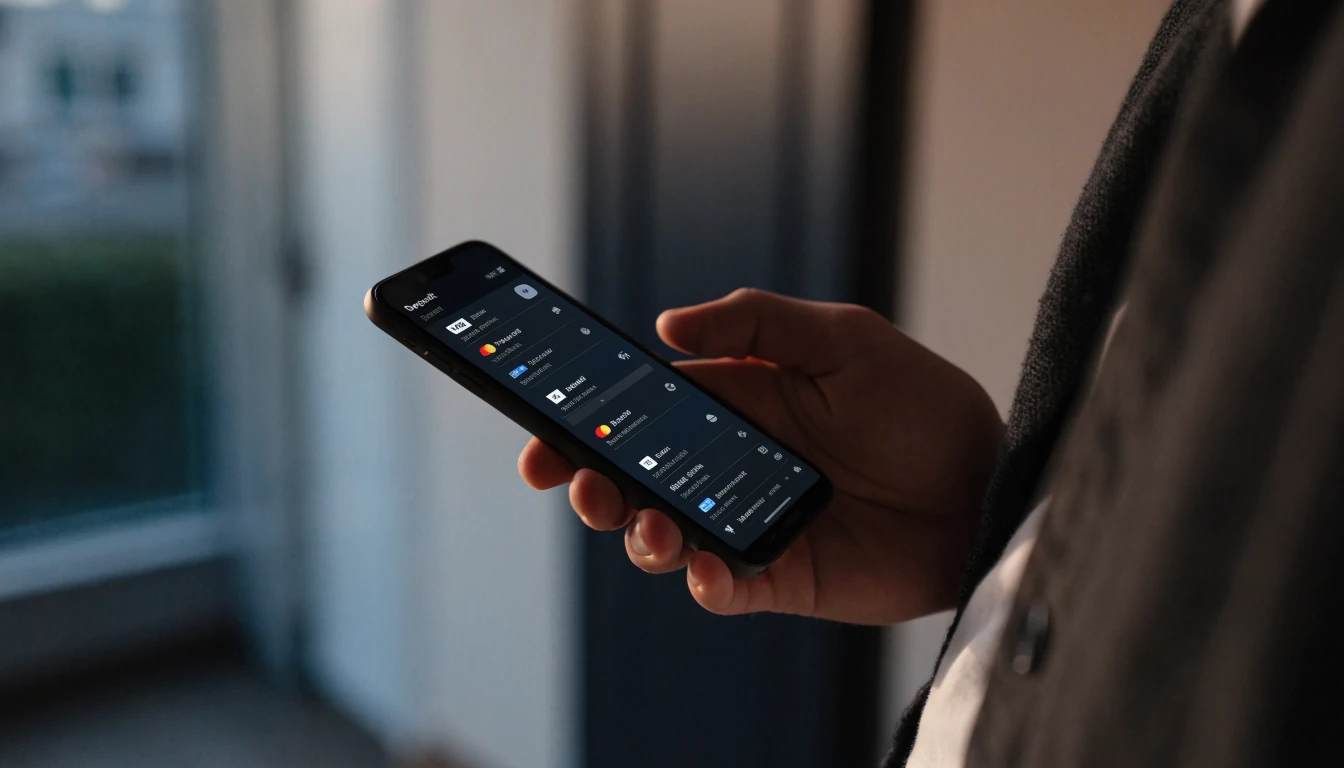
The distinction matters when comparing the amount entered with the amount the payment route can process. A requested Payforit deposit above £30 exceeds the stated per-transaction cap. The cap applies to the payment itself; it does not describe a slot’s stake, a game balance, or a withdrawal. Those are separate amounts and processes.
For mobile slot play, the practical calculation is therefore narrow: the Payforit transaction cannot exceed £30. A lower amount does not become a larger permitted payment because the destination is a slot account, and selecting a different slot does not alter the transaction ceiling. The payment route sets this boundary independently of the games available after funds reach the account.
The cap should not be read as permission to divide a larger intended deposit into a series of payments. It is a transaction ceiling, not a method for bypassing the limit. Nor does the stated maximum establish that a particular operator will accept a deposit at that value. The cashier’s displayed options determine whether Payforit is offered and what amount can be selected there.
This makes the ceiling useful as a quick exclusion test rather than a spending target. If the intended single payment is greater than £30, Payforit cannot carry that transaction. If the intended payment is within the cap, the amount still needs to be available as a selectable option in the live cashier. The difference is simple: the cap states the outer boundary for one Payforit deposit, while the cashier shows what the operator will actually accept.
For a slots deposit by mobile, the fixed figure is therefore the most that can be attributed to one Payforit transaction—not a promise that every account can deposit that amount.
Transaction Cap
The Payforit transaction ceiling is £30; any single requested deposit exceeding this amount cannot be processed via this route.
Using Mobile Deposits Without Assuming a Mobile Payout
A mobile deposit confirms only that funds can enter the casino account through that route. It does not establish that winnings can be sent back to a phone balance. Payforit cannot be used to withdraw casino funds, so a separate, verified payout route must be available before a deposit is made.
Before topping up slots with a mobile payment, establish which withdrawal methods the account can use. The cashier should show the routes currently available, while the operator’s terms set any account-specific conditions. A specialist review advises checking that the selected deposit method is also accepted for withdrawals; availability should be confirmed in the live cashier rather than inferred from the deposit screen.
Identity checks are part of the same decision. Outstanding verification can affect whether a withdrawal can proceed, so account requirements should be settled before money is deposited. The payout route also needs to match the account holder’s details and currency. For a Payforit deposit, a bank account, e-wallet or another verified payment source is needed for withdrawal; the phone route itself cannot return the balance.
Same-method rules are not universal. Some casinos outside the UK require a withdrawal to use the method used for the deposit. That condition must be read in the operator’s current terms, not assumed to apply to every casino serving UK players. Where the rule does apply, a phone deposit can create a mismatch if the phone method cannot process withdrawals.

Withdrawal thresholds are separate from deposit limits. A specialist review notes that a casino may reject a request when the balance is below its minimum withdrawal amount. The applicable threshold and any maximum or processing conditions need to be checked against the current account terms; these can vary and change. A deposit being accepted says nothing about whether the resulting balance can be withdrawn in the desired way.
The practical calculation is therefore not just the amount added to the account. It is the amount that can later be paid through an available, verified route, subject to identity checks and the operator’s current withdrawal terms.
Mobile Billing Limits, Fees and Transaction Caps
A Boku deposit has a stated ceiling of £30 for a single transaction, according to a specialist payment-method review. That figure is a transaction cap, not a promise that every casino accepting Boku will allow a deposit of that size. The operator’s cashier determines whether Boku is supported and what amount it will accept at the time of payment.
The cap limits the amount sent through one Boku transaction. It does not establish the account’s overall deposit allowance, nor does it describe the rules for another pay-by-mobile service. Any amount entered must fit both the payment method’s transaction ceiling and the casino’s own cashier terms. If the cashier sets a lower maximum, that lower figure governs the deposit.
The amount debited from phone credit or added to a mobile account may also include a network processing fee. A specialist payment-method review notes that such a fee can apply and that its amount depends on the network and tariff. The fee is not a fixed Boku charge that can be assumed across providers. It changes the total cost of the transaction, so the displayed amount and any network charge need to be considered together before confirmation.
Mobile Billing Limits
- Individual Boku transactions are capped at £30
- Network processing fees may apply depending on the tariff
- Prepaid balances must cover both the deposit and any fees
- Operator cashier terms may impose lower limits than the Boku cap
For prepaid service, the available balance needs to cover the deposit and any applicable fee; otherwise, the payment may not complete. On a contract tariff, a charge can affect the phone account even where the deposit itself is within the Boku ceiling. The operator’s cashier and the mobile network are separate parts of the cost: one sets the amount the casino will accept, while the other may add a processing charge.
Availability and pricing should therefore be checked against the current cashier and the relevant network terms. A Boku option shown at one casino does not establish support elsewhere, and the stated ceiling does not remove any lower limit imposed by the operator. The usable deposit is the amount accepted by the casino after the applicable payment conditions and charges are accounted for.
Assessing the Terms in the Live Cashier
A mobile top-up option is only one part of the cost calculation. Before depositing, the current cashier needs to show the minimum deposit, maximum transaction value, any fee and the account’s financial-limit controls. A specialist review can describe terms observed at a particular time, but it cannot replace the live cashier: payment options and their conditions can change.
The usable amount is bounded by both the payment method’s permitted range and any financial limit set on the account. If the intended deposit is below the displayed minimum or above the available maximum, it cannot be treated as an eligible transaction. Fees also matter: the amount charged may not equal the amount expected unless the cashier makes the fee treatment clear. The figures should be checked together, not read as separate decorations around a deposit button.
New remote customers must be given a prompt to consider setting a financial limit before making their first deposit. Limit controls must also remain available within the account afterwards. That makes the account limit part of the calculation, not an optional note to revisit after funds have been committed.
Terms for other payment routes require the same scrutiny. A specialist review may report a method’s limits or fees, but the live cashier is the point at which the current conditions for that account and selected method can be confirmed. Deposit and withdrawal minimums, maximums, fees and processing times depend on both the operator’s current terms and the payment route. Public banking information does not supply stable UK-specific figures for those withdrawal conditions, so it cannot settle the account’s actual terms.
The practical comparison is therefore between the amount requested, the amount the cashier says will be charged, and the amount permitted by the account’s active controls. A method is not cheaper merely because its fee is less visible; it is usable only when its displayed minimum, maximum, charges and account limits all allow the intended deposit.
Phone Credit Is Not a Credit Card
A casino top-up using phone credit is not the same transaction as paying with a credit card. With Payforit, the deposit is either added to a monthly mobile bill or taken from prepaid Pay as you Go credit. The first is a charge for a phone service that appears on a future bill; the second reduces a balance already held with the network. Neither description turns the payment into a credit-card transaction.
That distinction does not create an exception for credit-card gambling payments. UK Gambling Commission rules bar remote gambling operators from taking credit-card payments for gambling. Routing the card payment through a money service business does not change that restriction: the underlying funds still come from a credit card.
Phone credit is therefore not a substitute route for card borrowing. A mobile account may be billed later, but that does not make it a credit card, and a prepaid balance is not borrowed money. The relevant question is how the deposit is funded, not whether the payment passes through a phone or another service.
The rule concerns funding gambling with a credit card. It should not be read as permission to move credit-card funds through an intermediary, nor as evidence that a phone-billing deposit can be used to receive casino funds. Deposit and payout arrangements are separate matters, and the selected payment route must be assessed on its own terms.
What are the withdrawal limits when using a Payforit casino?
There is no universal Payforit withdrawal limit because Payforit cannot be used to withdraw winnings. Check the casino’s live cashier for the limits and terms of the separate payout method available to your account.
Is there a maximum deposit amount with Payforit at UK casinos?
Yes. Payforit deposits are capped at £30 per transaction, though the casino’s cashier may set a lower usable amount.
Which UK casinos still accept Payforit in 2026?
Payforit is listed at operators including Kwiff, NetBet, JackpotJoy and Virgin Games. Check the live cashier to confirm it is available for your account.
Can I withdraw casino winnings to my phone bill with Payforit?
No. Payforit can fund casino deposits, but winnings must be withdrawn using a separate method, such as a debit card, bank transfer, PayPal or an e-wallet.
Do UK casinos offer welcome bonuses for Payforit deposits?
Most UK casinos exclude Payforit deposits from welcome bonuses and other promotions. Check the offer’s terms before depositing.
How does Payforit work at a casino deposit?
Select Payforit, enter your mobile number, then confirm the transaction using the code sent by SMS. The deposit is charged to your monthly phone bill or deducted from your Pay as you Go credit.
What is the maximum I can deposit with Boku at a UK casino?
Boku deposits are capped at a standard maximum of £30 per transaction. Your phone credit must also cover the deposit and any network fee.
Written by the editors at Jeanniemarshall.com.